
描述
HTML
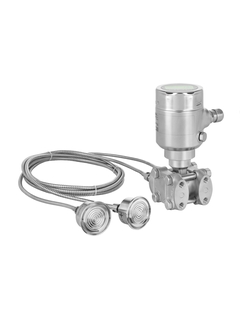
Deltabar FMD71 Electronic Differential Pressure System
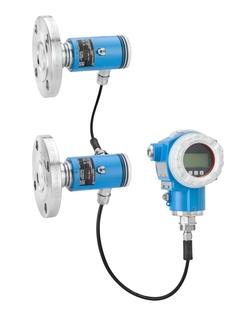
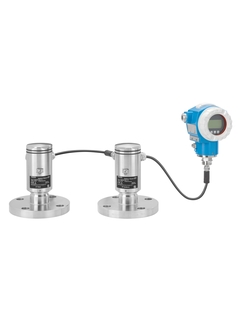
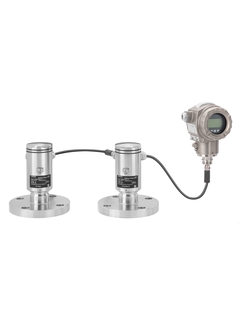
The Deltabar FMD71 is a next-generation electronic differential pressure system designed to eliminate the historical vulnerabilities of traditional DP measurement. By utilizing two independent ceramic sensor modules (Ceraphire) linked digitally to a single central transmitter, the FMD71 replaces mechanical impulse lines and oil-filled capillaries entirely.
This innovative architecture calculates level, volume, mass, or differential pressure in pressurized tanks, distillation columns, and evaporators with extreme accuracy. One sensor measures the high-pressure hydrostatic base while the second tracks the low-pressure head gas, communicating error-free digital values back to the main display.
Key Features & Benefits
- Elimination of Mechanical Risks: No capillaries to leak or freeze in cold climates, and no impulse lines to plug or clog, drastically improving process availability.
- Overload-Resistant Ceramic Sensors: High-purity (99.9% $Al_2O_3$) Ceraphire ceramic membranes resist vacuum damage, abrasive slurries, and aggressive process chemicals.
- Multivariable Digital Output: Transmits HART-based differential pressure, localized head pressure, and individual sensor temperatures simultaneously out of a single system loop.
- Minimized Safety Risk: Advanced electronic system design actively monitors its own circuit health, offering continuous auto-diagnostics to lower total cost of ownership.
- True Vacuum Resistance: Perfect for distillation columns and vacuum environments, maintaining a absolute vacuum resistance down to 0 mbar.
Technical Specifications
| Parameter | Specification Details |
| Measuring Principle | Electronic Differential Pressure (Dual Sensor Math) |
| Reference Accuracy | Standard: $\pm$0.075% of single sensor
Platinum: $\pm$0.05% of single sensor |
| Measuring Cell Range | 100 mbar to 40 bar (1.5 psi to 600 psi) |
| Maximum Overpressure Limit | 60 bar (900 psi) |
| Vacuum Resistance | 0 mbar absolute |
| Long-Term Stability | 0.05% of URL per year for individual sensors |
| Process Temperature Range | -25°C to +150°C (-13°F to +302°F)
(Extended down to -40°C on specific setups) |
| Ambient Temperature Range | -40°C to +80°C (-40°F to +176°F) |
| Supply Voltage Range | Non-Ex: 12–45V DC | Ex ia: 12–30V DC |
| Communication Interface | 4…20 mA HART |
| Membrane Materials | Ceramic (Ceraphire), 316L Stainless Steel, AlloyC |
| Gasket Selection | Viton, Kalrez, EPDM, NBR, Silicone |
| Housing Configurations | Die-cast aluminum, Stainless steel |
| Process Connections | Standard Threads, Flanges (DIN, ASME, JIS) |
| Hygienic Process Connections | Tri-Clamp, Varivent, DRD, DIN11851, DIN11864-1 |
| Hazardous Approvals | ATEX, FM, CSA, IECEx, NEPSI, INMETRO, UK Ex |
| Compliance & Sanitary Standards | SIL, NACE MR0175, EN10204-3.1, EHEDG, 3A |
Product Comparison: Electronic DP vs. Traditional Capillary/Impulse Systems
| Operational Challenge | Deltabar FMD71 (Electronic DP) | Traditional Capillary / Impulse Lines |
| Ambient Temperature Shifts | No Effect: Fully digital cables remove thermal drift risks | High Risk: Liquid density changes in capillaries cause drift |
| Impulse Line Freezing | Eliminated: Zero liquid columns or purge systems required | High Maintenance: Requires continuous heat tracing / insulation |
| Response Time Friction | Instantaneous: High-speed digital signals link sensors | Sluggish: Capillary oil viscosity slows down transmission |
| Vacuum Resistance | Excellent: Hard ceramic face withstands up to 0 mbar | Poor: High vacuum risk of oil outgassing or membrane collapse |
| In-Situ Verification | Continuous: Live loops check sensor health over HART | Manual: Requires physical isolation and calibration checks |
Reliable Procurement with ZK Global Supply
ZK Global Supply delivers authentic, certified process instrumentation directly to global enterprise networks. Our product specialists configure the Deltabar FMD71 electronic differential pressure system with exact sensor span matching, tailored flange dimensions, and specialized O-rings (like Kalrez or Viton) to match your medium parameters perfectly.
Request a Quote Today: Reach out to our technical engineering sales office to discuss configuration, get competitive pricing, or review lead times for your distillation or tank project.
Frequently Asked Questions (FAQ)
- Q1: How does an electronic differential pressure system work compared to a regular DP cell?
- A: Instead of using fluid-filled impulse lines or mechanical capillary tubes that are prone to plugging, freezing, and temperature drift, an electronic differential pressure system uses two distinct physical sensors connected by a flexible electrical wire. The high-pressure and low-pressure readings are processed digitally at the transmitter to compute accurate differential totals.
- Q2: What are the benefits of the Ceraphire ceramic sensor in the FMD71?
- A: The Ceraphire membrane is made of 99.9% ultra-pure ceramic ($Al_2O_3$). It offers superior mechanical hardness, excellent chemical resistance against aggressive chemicals, and zero risk of oil contamination because it does not require an internal oil fill layer behind the process face.
- Q3: Can the Deltabar FMD71 handle vacuum applications?
- A: Absolutely. While oil-filled stainless steel membranes can distort or fail under high vacuum due to fluid outgassing, the solid ceramic face of the FMD71 allows for a 0 mbar absolute vacuum resistance, ensuring absolute performance inside industrial distillation columns or vacuum evaporators.
- Q4: What parameters can I read from the HART output?
- A: The FMD71 is a true multivariable device. Out of a single loop connection, you can pull the total calculated differential pressure (level/volume), the independent head pressure reading, and the internal temperatures of both individual sensor modules.