
描述
Deltabar FMD72 Electronic Differential Pressure System
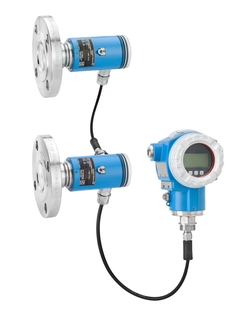
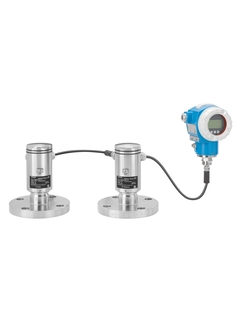
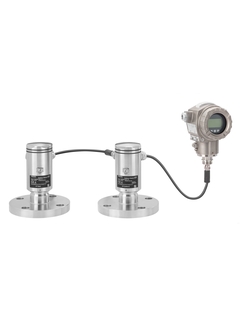
The Deltabar FMD72 is a cutting-edge metal sensor electronic differential pressure system engineered to overcome the high failure rates associated with traditional capillary tubes and impulse lines. By linking two independent metal sensor modules digitally to a single, central transmitter display, the FMD72 removes temperature drift, leakage, and line-plugging errors entirely from your process metrics.
This system is optimized for level, volume, mass, and differential pressure tracking in pressurized process tanks, fractionating columns, or evaporators. The high-pressure (HP) sensor tracks the hydrostatic liquid head, while the low-pressure (LP) sensor reads the vapor head space, transmitting error-free digital values that calculate precise process levels even under high static pressures.
Key Features & Benefits
- High Overpressure Protection: Designed with resilient metal sensor cells capable of handling sudden line spikes and static pressure up to 160 bar (2,400 psi).
- Hygienic Flush Mounted Options: Small, flush-mounted process connections eliminate dead space and pockets, ensuring superior cleanability and process safety in sanitary environments.
- Multivariable Loop Reporting: Simultaneously extracts calculated differential pressure, top vapor head pressure, and independent cell temperatures via a single HART channel.
- Robust Metallic Architecture: Available in 316L Stainless Steel and Alloy C configurations, providing the ductile strength required for extreme mechanical stress or hydraulic hammer.
- Lowest Ownership Cost: Eliminates expensive heat-tracing insulation, capillary refill maintenance, and physical line purging, driving down installation and operational overheads.
Technical Specifications
| Parameter | Specification Details |
| Measuring Principle | Electronic Differential Pressure (Dual Metal Sensors) |
| Reference Accuracy | Standard: $\pm$0.075% of single sensor
Platinum: $\pm$0.05% of single sensor |
| Measuring Cell Range | 400 mbar to 10 bar (6 psi to 150 psi) |
| Maximum Overpressure Limit | 160 bar (2,400 psi) |
| Vacuum Resistance | 10 mbar (0.15 psi) |
| Long-Term Stability | 0.05% of URL per year for individual sensors |
| Process Temperature Range | -40°C to +125°C (-40°F to +257°F)
(Optional extensions up to +250°C / +480°F) |
| Ambient Temperature Range | -40°C to +80°C (-40°F to +176°F) |
| Supply Voltage Range | Non-Ex: 12–45V DC | Ex ia: 12–30V DC |
| Communication Protocols | 4…20 mA HART |
| Wetted Materials | 316L Stainless Steel, Alloy C |
| Fill Fluid Options | Silicone oil, Synthetic oil |
| Housing Design | Die-cast aluminum, Stainless steel |
| Process Connections | Industrial Threads, Flanges (DIN, ASME, JIS) |
| Hygienic Process Connections | Tri-Clamp, Varivent, DRD, DIN11851, DIN11864-1 |
| Global Certificates | ATEX, FM, CSA, IECEx, NEPSI, INMETRO, UK Ex |
| Design & Safety Standards | NACE MR0175, EN10204-3.1, EHEDG, 3A |
Product Comparison: Deltabar FMD72 (Metal) vs. Deltabar FMD71 (Ceramic)
Selecting the ideal electronic DP platform depends heavily on your mechanical and chemical criteria. Here is how the two electronic systems compare:
| Operational Parameter | Deltabar FMD72 (Metal Sensor) | Deltabar FMD71 (Ceramic Sensor) |
| Core Keyword Focus | Metal Sensor Electronic Differential Pressure System | Ceramic Sensor Electronic Differential Pressure System |
| Max Overpressure Limit | High Protection: Up to 160 bar (2400 psi) | Moderate Protection: Up to 60 bar (900 psi) |
| Hygienic Mounting | Flush-mounted small connections prevent fluid traps | Extended recess or standard isolation setups |
| Thermal Shock Resistance | Moderate (Metal expands/contracts linearly) | Excellent (Ceramic base properties are inert) |
| Abrasive Slurry Application | Metal can score; best for clean/viscous liquids | Highly resistant to abrasive or scraping solids |
| Absolute Vacuum Limit | 10 mbar (0.15 psi) | 0 mbar (True absolute vacuum resistant) |
| Low-End Temperature | Operates down to -40°C (-40°F) | Operates down to -25°C (-13°F) |
Reliable Procurement with ZK Global Supply
At ZK Global Supply, we source and distribute certified, original field instrumentation to processing plants worldwide. Our technical support engineers configures your Deltabar FMD72 with specialized flush-mount connections, food-grade synthetic oils for sanitary setups, or NACE-compliant metallurgy for sour gas environments.
Request a Quote Today: Contact our engineering sales group for customized configuration sheets, price breaks, or expedited shipping times for your next tank level project.
Frequently Asked Questions (FAQ)
- Q1: Why choose the metal sensor Deltabar FMD72 over the ceramic FMD71?
- A: The metal sensor design of the FMD72 provides a much higher overpressure limit (up to 160 bar / 2400 psi) compared to ceramic systems. Additionally, the FMD72 allows for small, flush-mounted process connections that eliminate dead legs, which is highly preferred in hygienic environments to guarantee complete cleanability.
- Q2: How does the FMD72 eliminate traditional differential pressure problems?
- A: Traditional DP transmitters rely on capillary tubes filled with transmission oil or physical water-purged impulse lines. Ambient cold or heat shifts change the density of that oil, causing measurement errors. The FMD72 uses a purely electronic architecture—two digital sensors connected by a basic electrical cable—eliminating oil-drift, icing, and plugging hazards completely.
- Q3: What is the maximum process temperature the Deltabar FMD72 can handle?
- A: The base system safely operates between -40°C to +125°C (-40°F to +257°F). However, for specialized high-temperature reactors, distillation towers, or hot wash cycles, it can be optionally configured to support temperatures up to +250°C (+480°F).
- Q4: Is the Deltabar FMD72 compliant with clean-in-place (CIP) safety standards?
- A: Yes, the system carries comprehensive EHEDG and 3A hygienic approvals. When configured with flush metal seals and synthetic fill fluids, it easily tolerates aggressive sanitization processes.